Francis Maxwell Chrystal 1882-1944
February 15, 2026 James Hamilton
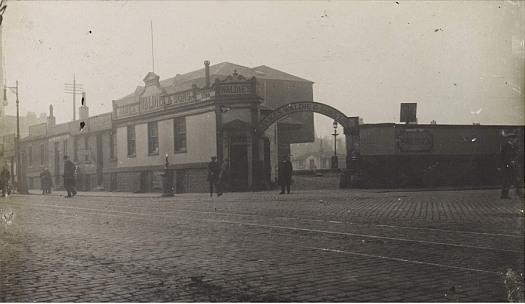 Francis Maxwell Chrystal, The Corner of Morrison Street and Lothian Road, Edinburgh, 1921
If you visit the new Trove.scot website, or the Edinburgh City Libraries’ online image archive Capital Collections, and search for the name Chrystal, you’ll find some of the finest images on the sites. Rural Davidson’s Mains, with cattle roaming the public road; extraordinary, near-panoramic views of a crisp, newly-built Belgrave Crescent; almost shockingly clear and vivid plates of village scenes in Stromness. They bear the hallmarks of a real photographer: clear focus, balanced light, conscious framing and scene selection, the religious attention paid to verticals and the horizon.
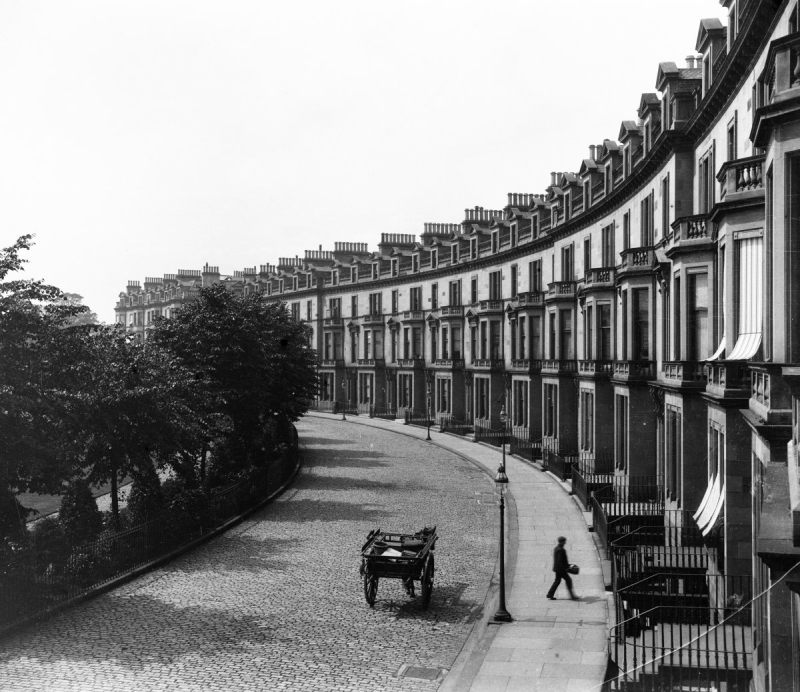 Belgrave Crescent, Edinburgh c.1882 from above
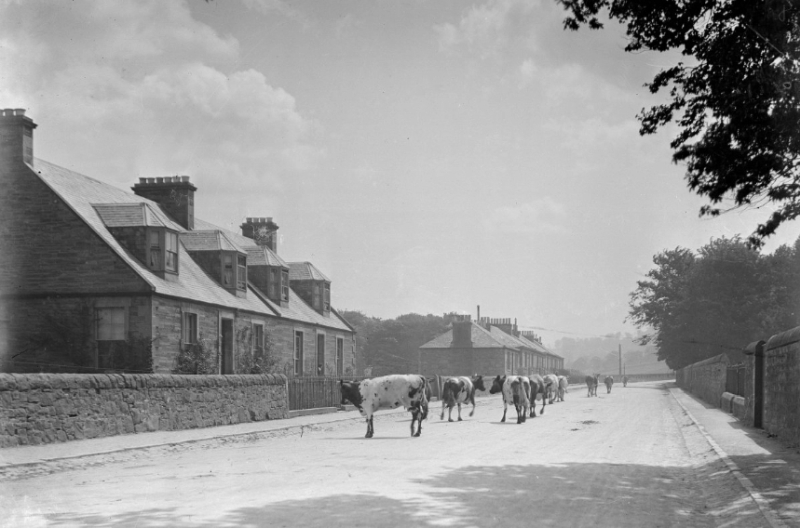 Davidson’s Mains c. 1894
They are rich, gorgeously finished images, yet their creator, Professor George ChrystalFor Professor George Chrystal, see Mohanmmed Yousuf, The Life and Work of Prof. George Chrystal (1851-1911) Thesis Submitted for the degree of PhD at the University of St Andrews (1990) and obituary The Scotman Nov. 4th 1911 p.9. Significant papers and photographic work by Professor Chrystal are held at the University of Edinburgh Library (Heritage Collections)., a friend of James Clark Maxwell, has always been ignored by photographic history. Perhaps his photography was been drowned out by his other achievements: Chrystal was a great academic reformer, a lecturer of genius, and the author of an algebra textbook that is still, just, in print. Of his children, two became Oxbridge dons, another was knighted in the civil service and another worked with Moulton and Issigonis on the Mini. But this isn’t about him or them. It’s about his other son, and his story isn’t like that.
Francis Maxwell Chrystal (1882-1944) was that rare thing, an important flawed photographer. He was one of a loosely-connected group who in the forty years or so before 1925 made Edinburgh one of the best-recorded cities photographically in the world, working either as individuals or centred on the Outlook TowerSome of the best photographic work of the Outlook Tower team is held at the University of Strathclyde https://atom.lib.strath.ac.uk/patrick-geddes-papers or around the Edinburgh Photographic Society’s Survey SectionThe best account of the Edinburgh Photographic Society Survey Section is that of the late Peter Stubbs. Collections of Survey Section images reside at the Edinburgh Room at Edinburgh Central Library (indexed by location and photographer) and the Scottish National Portrait Gallery (as a specific collection). Their legacy is the hundreds of prints and glass negatives in the city’s archives and elsewhere from this period. Even in this company, though, Francis was prolific, and his work is absolutely vital in the understanding of Scotland’s capital either side of the Great War. There is a great deal of the city which without him would have vanished unrecorded.
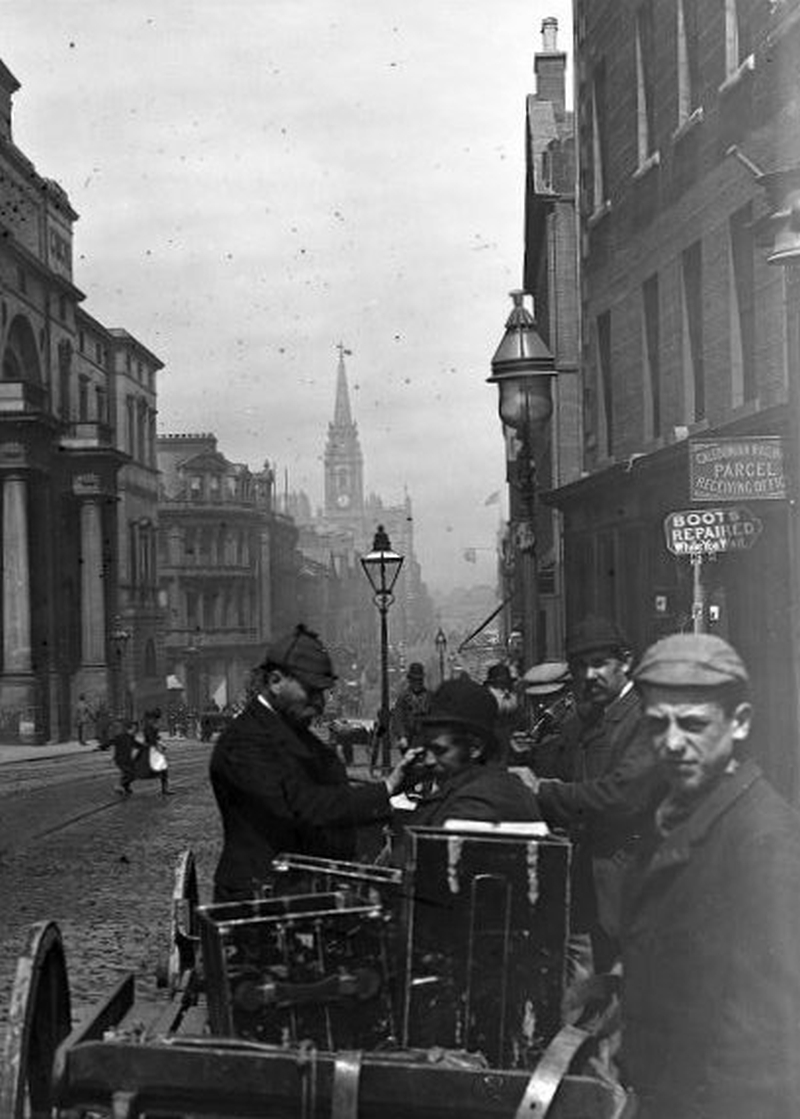 Photographers on Edinburgh’s South Bridge prepare for work c. 1905 [Detail: photographer unknown].
But it isn’t necessarily good work as conventionally or professionally understood. So long as his main subject is in frame, he is indifferent to what intrudes at the margins. His focus is always soft. He constantly underexposes his images. He even seems to get worse with experience: there is a steady decline in quality from his earliest datable work of about 1907 to the unpublished, unpublishable final frames of summer 1938 that even Capital Collections have omitted.
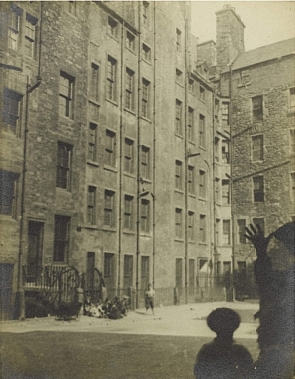 F.M. Chrystal: James’ Court, Edinburgh c. 1912, with boys intervening at the margin
But sometimes, even often, what crowds into the margins of your images when you are careless is the stuff of life that more deliberate pictures miss. The historian Diarmid Mogg says of Chrystal that “His photographs are beautiful, but have a quiet stillness that makes Fountainbridge seem like a district inhabited by ghosts”. His photograph of the Palais de Danse on Fountainbridge is the most thrilling and communicative that we have of the interwar Edinburgh of chip shops, football and cinema.
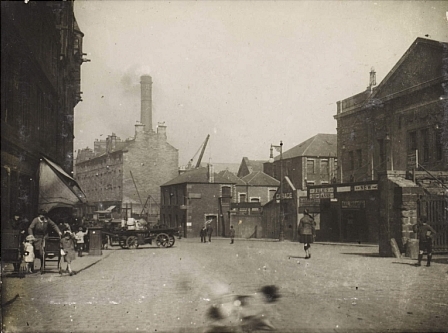 F.M. Chrystal, Fountainbridge and the Palais de Danse c. 1921
But for the first part of his photographic life, it wasn’t like that at all. Francis was born in 1882 in the then-new Belgrave Crescent, overlooking the valley of the Water of Leith from the western side of Dean Bridge, the second son of the family. His father’s earliest known photographs date from the 1870sThe full deposit can be viewed at NRS GD492 and the art was part of Francis’ life from the outset. He was a Watsonian, and in 1902 matriculated at the University of Edinburgh to study medicineMedical and Dental Students Register, accessed via Ancestry.co.uk.
It’s at this point that the film of his life begins to jar and stutter on the screen. In 1903, his mother died, and something unrecorded and unexplained extends his five year degree into ten, graduating in 1912 the wrong side of his thirtieth birthdayEdinburgh University Calendar 1913-1914.
In other ways, though, his Edwardian life shares the dreamtime atmosphere of so much pre-1914 Edinburgh middle class existence. By 1903 there’d been photographers at Rock House (the Edinburgh equivalent of ravens at the Tower) for sixty years, and the Inglis clan would be there for another fortyFor the Inglis clan at Rock House, see Charles Minto Edinburgh as it was. Vol. 1, photographs 1844-1924 by the Rock House Studio, Edinburgh (Nelson: Hendon Publishing Co., 1974). The Edinburgh Photographic Society’s Survey Section was active, and although Chrystal wasn’t directly part of it, his first documented photographic action was a 1909 illustrated lecture given to the Society about Iceland accompanied by his own slides. Patrick Geddes’ disciples were active on the Royal Mile, documenting Geddes’ Old Town reforms from their redoubtable headquarters in the Outlook Tower. In 1908, the Old Edinburgh Club was formed with Francis as a founder memberThe inaugural membership list of the Old Edinburgh Club is given as an appendix in the 1908 first volume of the Old Edinburgh Club, with the Book of the Old Edinburgh Club (the Club’s printed proceedings) carrying excellent photography from the start.
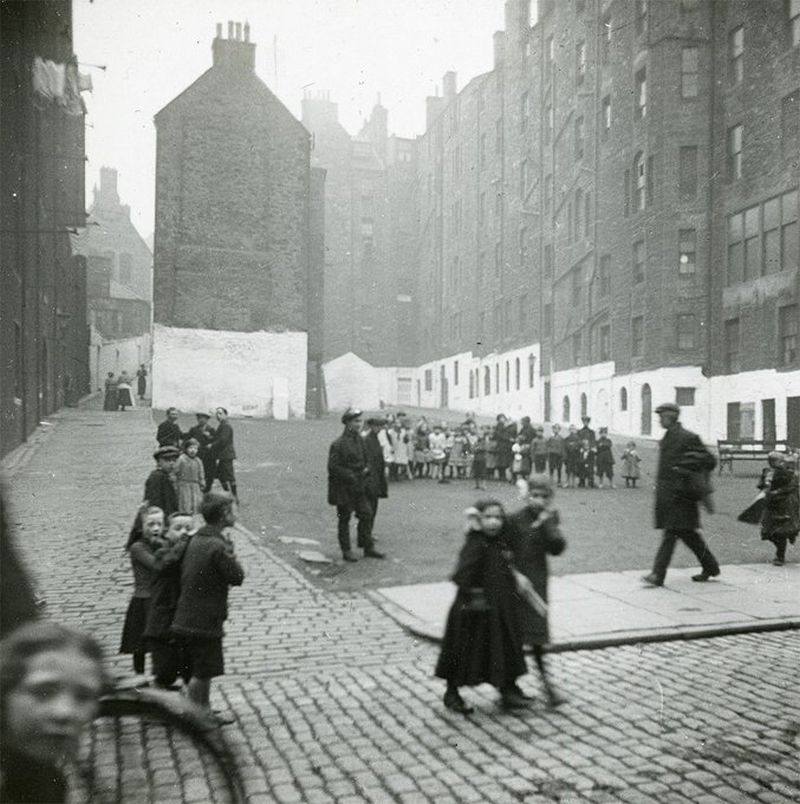 An Old Town scene taken by the Geddes team based at the Outlook Tower, showing the whitewashing of lower floors encouraged by Geddes.
The Royal Commission on the Ancient and Historical Monuments of Scotland had its start at this time, too, and Francis’ first published work was taken as part of his collaborative work with Professors Thomas Ross and Baldwin Brown and others. His photograph of the Cannonball House on Castle Street appeared in the Book of the Old Edinburgh Club in 1909Bruce J. Home, ‘The Cannon-Ball House’, Book of the Old Edinburgh Club, Original Series, 2 (1909), pp. 117-119, and he’d conduct work at St. Giles Kirk, at the Tailor’s Hall on the Canongate and at the Magdalen Chapel on the Cowgate, much of which would appear in the Book of the Old Edinburgh Club as the Great War got underway.
Edinburgh’s antiquarian world was and is hugely warm and clubbable, and the first part of Francis’ photographic life took place at the heart of it. Ross and Baldwin Brown would comment that “the assistance he is giving in this way to antiquarian and architectural study is worthy of cordial recognition. The illustrative photographs reproduced in this paper were with one exception taken by him, under conditions that were sometimes of no little difficulty, and the results have repaid the labour involved”Thomas Ross and G. Baldwin Brown, ‘The Magdalen Chapel, Cowgate, Edinburgh’, Book of the Old Edinburgh Club, Original Series, 8 (1915), pp. 1–78..
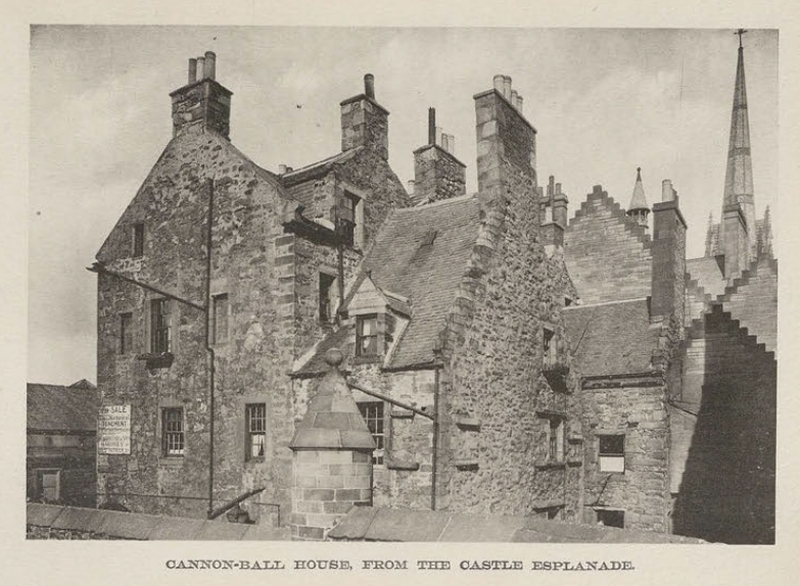 F.M. Chrystal, Cannon-Ball House from the Castle Esplanade, published by *The Book of the Old Edinburgh Club in 1909.*
The photography at this stage of his life was notably sociable and collegiate. A beautiful art nouveau scrapbookEdinburgh City Libraries, Edinburgh Room, Miscellaneous collection of presscuttings, Edin., 1902-1940. 1902-1940. 3v. C62176, C62178-9 now at the Edinburgh Central Library’s Edinburgh Room holds his work at St. Giles’ Kirk and also contains photographs taken by Francis during an Old Edinburgh Club jaunt to Swanston, where old stonework from the Kirk was preserved in the garden of the cottage once owned by Robert Louis Stevenson. At the end of the scrapbook, under a bronze strip left by dried glue, Francis remarks that the photograph of “F.M.Chrystal with his camera” had been taken by William Wilson, who was a fellow Club member and the brother of one of Francis’s fellow medical students.
The photograph is missing.
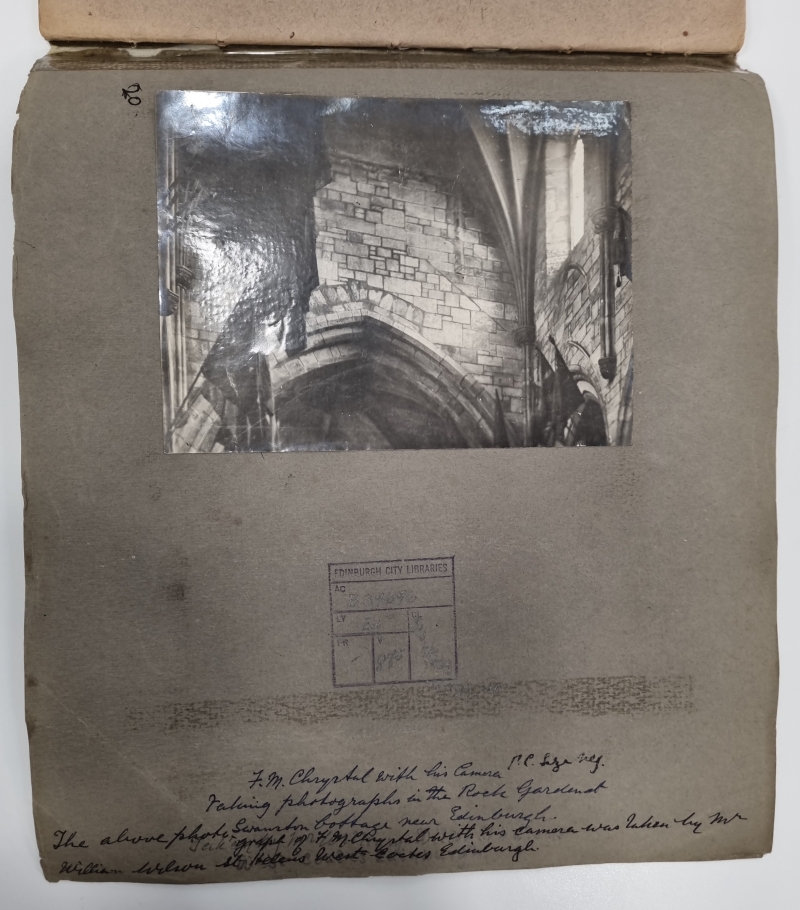 A page from a scrapbook of Francis Chrystal work of St. Giles Kirk and Swanston c. 1915
Like many prolific photographers, Francis was himself underphotographed. I have been unable to find a picture of him, but he was almost certainly part of an Old Edinburgh Club tour of the Old Town led by another of his antiquarian collaborators, John Geddie, and so he may be in the group seen here at the bottom of Blackfriars StreetFor the 1908 Geddie Old Town Jaunt see Graeme Cruickshank, ‘Rambling Round the Walls: One Hundred Years On’, Book of the Old Edinburgh Club, New Series 8 (2010), pp. 111–119.
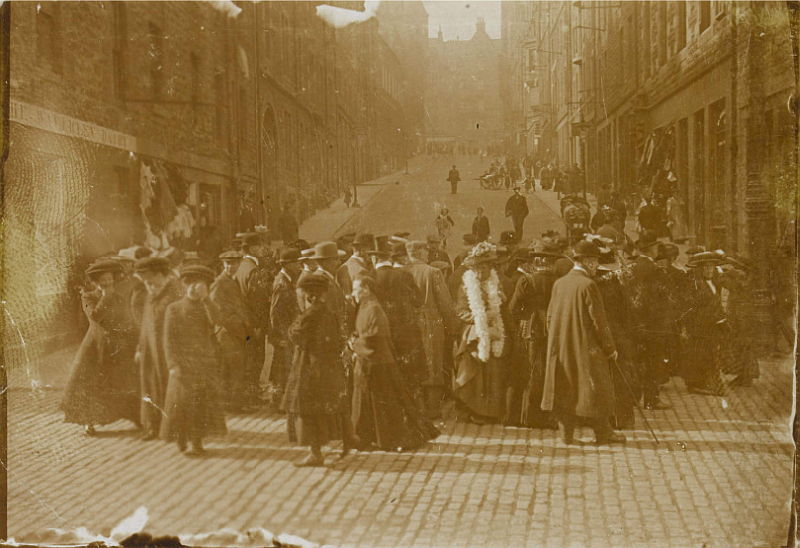 The Old Edinburgh Club visit the Old Town in 1908 led by the historian and friend of Chrystal John Geddie.
The loss of the portrait is of a piece with events outwith photography. In 1911, his father, having just refused a knighthood on the grounds of his responsibilities to his dependent children, died unexpectedly. A few months later, Francis finally graduated with an ordinary degree in medicine. He’d go to sea not long after as the medical officer for (it’s believed) the Blue Funnel line, keeping up digs in the city, but after the death of his father he’d never again have a home entirely of his own. His Edinburgh photography of the Great War years would take place during periods of shore leave and by the time the war was over his brothers and sisters had all left for England.
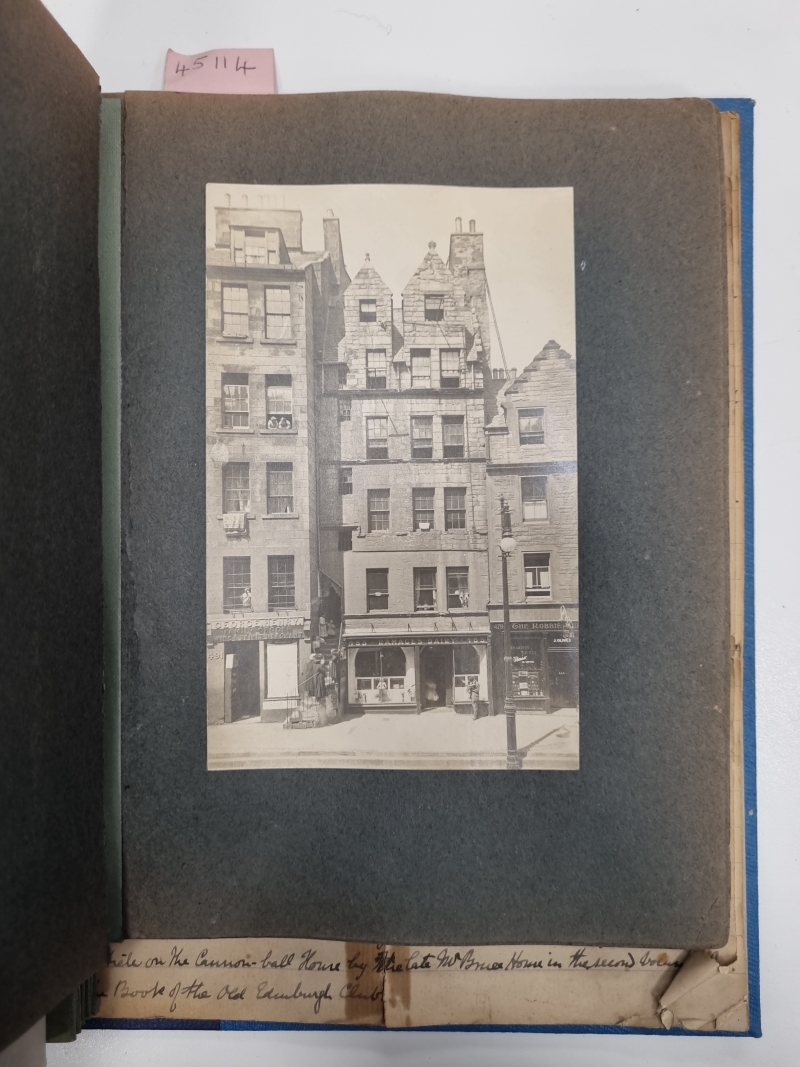 A page from the album given by Chrystal to Katharine Park Wands in 1912, showing Gladstone’s Land and a trace of his handwritten explanatory notes
But before all that there’d be one last monument that Francis would leave to his Edwardian Edinburgh dreamtime. It takes the form of a small, neat album of photographs, passed to Edinburgh City Libraries by Hamilton Library during the 1960sEdinburgh City Libraries, Edinburgh Room, Chrystal, F M Album of photographs with notes. C45114 Manuscript notes. Gift: Hamilton Public Library.. It was put together by Francis Chrystal at the close of his time as a medical student, and contains about a dozen jewel-like images, his greatest work, beautifully printed and carefully mounted onto good black album stock. They show scenes of Edinburgh Old Town closes, views of historic Lawnmarket buildings, and the old Edinburgh Royal Infirmary. Although the prints are uncaptioned, the album holds five or six leaves of patiently explanatory text in Francis’ own hand. There is a title page, with the neat text “Album of Photographs with Notes. F.M. Chrystal. 1912”. At the end, there is a simple, single dedication:
To Nurse Wands from F.M. Chrystal. November 1912.
And then Francis goes to sea, and then to warNational Archives BT 351/1/24343 Merchant Navy Medal Index Cards 1914-1920.
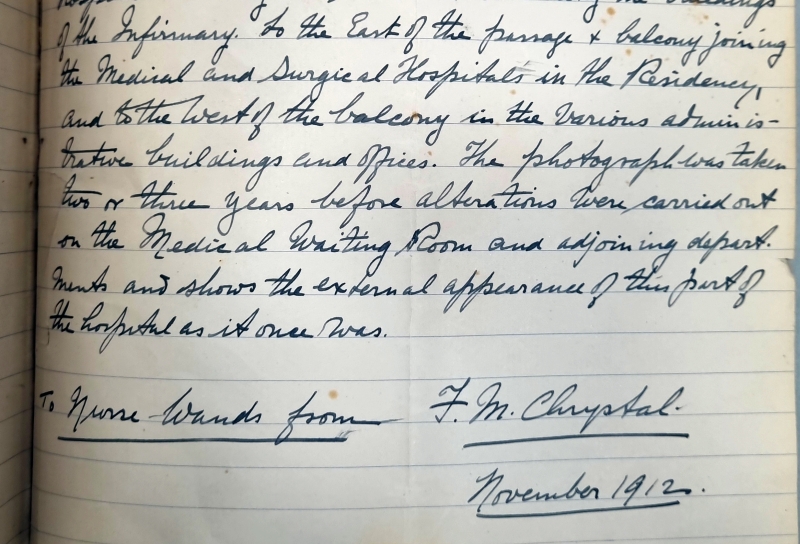 To Nurse Wands from F.M. Chrystal. November 1912.
At the Edinburgh Room of Edinburgh Central Library, there’s another Francis Chrystal scrapbookEdinburgh City Libraries, Edinburgh Room, Miscellaneous collection of presscuttings, Edin., 1902-1940. 1902-1940. 3v. C62176, C62178-9. As you open it, something blares to life in front of you: it’s the summer of 1935, Francis is back in Edinburgh, and the Weekly Scotsman is printing from his collection of photographs for a new series called “Changing Edinburgh”.
Francis was in his fifties by now, and as the series wound on into the early autumn, he cut each instalment of the series out and preserved it alongside letters to him from the editor and his handwritten accounts of the newspaper’s payments to him. Some of the photographs used were by Francis, others simply from his collection. Earlier in the scrapbook are a small number of similar columns illustrated from Francis’ collection, printed by the Scotsman itself in 1931.
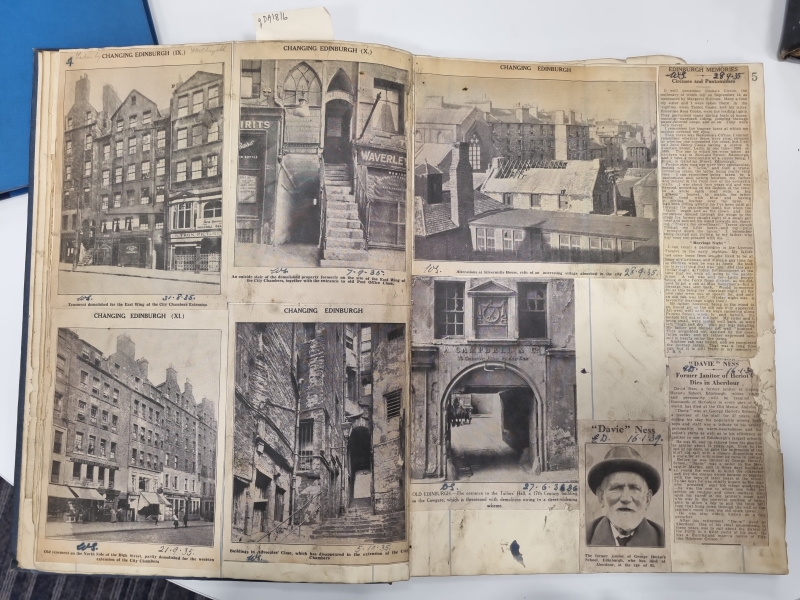 F.M. Chrystal’s scrapbook of contributions to the Weekly Scotsman, summer 1935
The editor of the Weekly Scotsman, Ralph Foster Topping, was older than Francis but the voice of the letters was that of a younger man addressing an elder. As the dry summer turned into autumn, though, professionalism turned into irritation: “I note the contents of your letter. I am very sorry that the acknowledgment was again omitted. I am having it set up in multiple form, one to be used with every picture in this series, and I hope that the omission will in future be avoided”Topping’s letters to Chrystal are preserved in Chrystal’s scrapbook of Scotsman and Weekly Scotsman work (see n. 11 and n. 15). There’d be more than ten “Changing Edinburgh” columns before they petered out (Francis ended his monetary account of the scheme with the words “No picture by F.M.C. in this issue of the Weekly Scotsman” for October 26th 1935 - which he then repeated underneath in a second, identical entry before an empty line. The rest of the album is empty). In July, Francis had clearly been making suggestions for additional columns: Topping refers at one point to “the canal pictures”, asking “would these make a sufficient group for a page of illustrations.”
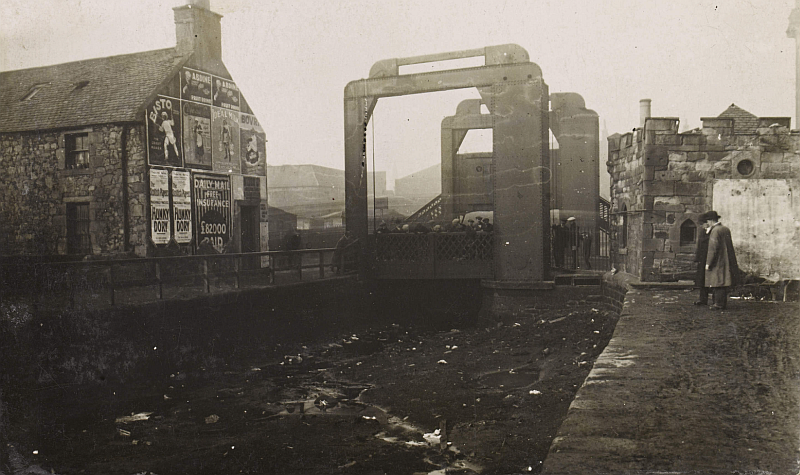 F.M. Chrystal, The basin of the Union Canal in Edinburgh, drained in the summer of 1921
The “Canal Pictures” were Francis’ last major set of photographs, and today they are of high importance as the sole thorough image record of an entirely lost Edinburgh phenomenon: the termini and docks of the Union Canal to Glasgow which opened for business in 1822. In the capital, the Canal terminated in two docks at the Fountainbridge end of Lothian Road, Port Hopetoun and the smaller Port HamiltonFor a history of the Union Canal’s Edinburgh termini see Graeme Cruickshank, ‘Port Hopetoun, Eastern Terminus of the Union Canal’, Book of the Old Edinburgh Club, New Series, 20 (2024), pp. 93–112. These closed officially in 1921, but the traffic had been light for many years and the chief obstacle to closure and redevelopment was the lingering presence of businesses in the buildings surrounding each of the Ports. Port Hamilton’s had gone by 1923; Port Hopetoun’s over the course of the following year. During the Great War, the Edinburgh termini had briefly been drained for cleaning, and in 1921 this was done againPort Hopetoun: A Quaint Edinburgh Byway, The Scotsman, 02 Aug 1921, p.4. Chrystal was there with his camera, and during the same period made at least two photographic surveys of the area, and it was these images that Topping had enquired for. Lothian House was under construction on the cleared site of Port HopetounFor Lothian House, see Lothian House An enterprise in the Scottish capital to provide offices and shops of a metropolitan character (Edinburgh: Pillans and Wilson, 1936) with articles by W. Forbes Gray and Lewis Spence., intended to serve as Edinburgh’s Somerset House (and home for the Inland Revenue) and any columns would be highly topical.
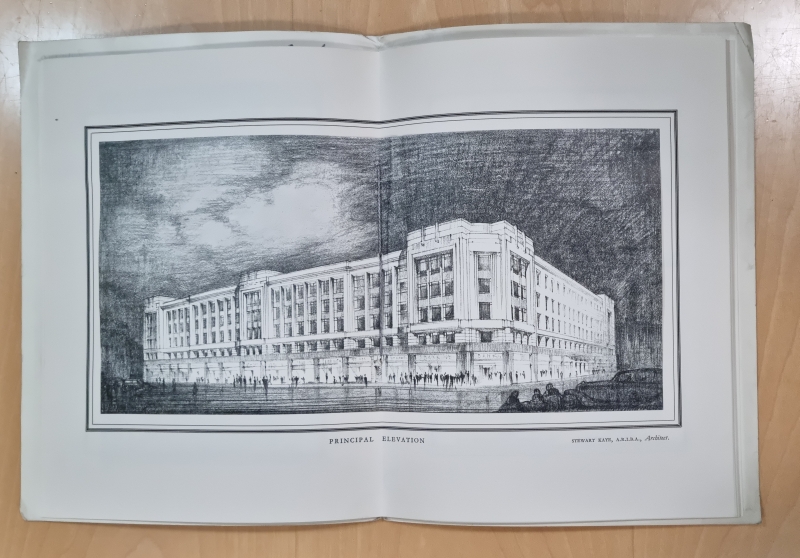 Facade of Lothian House, built on the site of Port Hopetoun and opened in 1936
The pictures are also evidence for Francis himself being back from the sea. His war service with the Merchant Navy had begun in 1916, but that is the only surviving information of it that we have. The information about him between 1921 and 1935 flickers and stutters. From 1925 he is recorded as the tenant of James B. Dunn at 187 Gilmore PlacePer Valuation Rolls, https://www.scotlandspeople.gov.uk/ , but after 1923 his entry in the Medical Register ceases; from 1929 he is listed in the alphabetical list in the Post Office directory at Gilmore Place. He is described as a “photographer” in the Post Office directory alphabetical list, but he is not listed as such in the same volume’s trade directory, nor is he present in the Post Office medical section. Perhaps the likeliest scenario is that he simply returned to sea in 1922, keeping up Gilmore Place as digs, before returning for good at the end of the 1920s. A second Edinburgh Room scrapbook of his, of newspaper articles of Edinburgh antiquarian interest but not holding any Chrystal material, began in 1928-29 and was kept up until his deathAgain, Edinburgh City Libraries, Edinburgh Room, Miscellaneous collection of presscuttings, Edin., 1902-1940. 1902-1940. 3v. C62176, C62178-9.
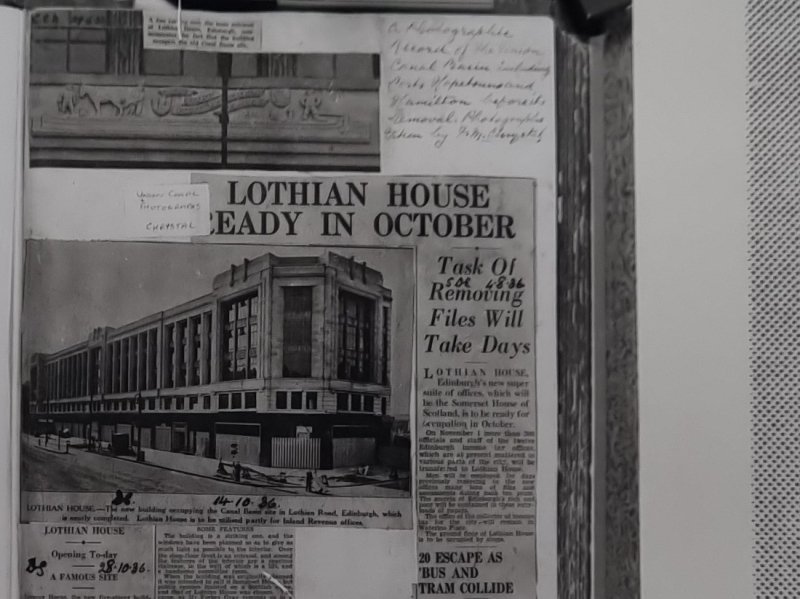 Photocopy of the opening page of Chrystal’s Canal Album of 1936.
In 1936, Francis pulled together his canal pictures into a separate album, now also in the keeping of the Edinburgh RoomEdinburgh City Libraries, Edinburgh Room, F.M. Chrystal A Photographic record of the Union Canal basin including ports Hopetoun and Hamilton before its removal. 1936. C62161. They are also the subject of a dedicated online exhibition at Capital Collections, and are unique. But the Weekly Scotsman did not print them. The plates are often dark, some with fogging, others with scratches: the technology of the 1930s newspaper might have struggled to make effective use of them. Above all, they are genuinely bleak images. If it is true that a photographer working at length with intent will communicate themselves through their images, then what comes through Francis’ images of Fountainbridge is forceful, tangible loneliness and isolation. He would have returned from the Great War to an Edinburgh empty of home and family, and the old pre-war photography community and projects diminished or gone. And what of Nurse Wands?
When she was given the 1912 album by Francis, Katharine Park Wands was 25, living in hospital accommodation at the Edinburgh Royal InfirmaryKatharine Park Wands (sometimes “Catharine”), per Valuation Rolls, https://www.scotlandspeople.gov.uk/ and per Ancestry.com Census Records and General Nursing Council’s Nursing Register 1898-1968.. She was the daughter of a worker at Avon Mill in Hamilton24, and her brothers were miners in the Lanarkshire coalfield. She’d remain in Edinburgh for the course of the Great War, before leaving in 1918 to nurse in Kirkudbrightshire. There is little to know about the friendship with Francis that led to his gift of the album. Did she leave when he returned from the war with nothing to offer her? Or is that to misunderstand what might have been a brief, quiet relationship or shared interests in the ancient city around them? When she returned to Edinburgh in 1923 it is likely that Francis had returned to sea. But she’d stay in Edinburgh for the rest of her life, unmarried, and carefully kept the album until she died in 1955. There is little to know about the two of them, but there is a shadow here somewhere of missed happiness, a chance lost perhaps in the social gulf between a professor’s second son and the daughter of a mill labourer.
When Francis finally returned to Edinburgh for good at the end of the 1920s, there was the question of money and making a living. In 1912, the death of his father and his late medical qualification at 30 years old - to say nothing of the advent of war - probably ruled out his getting a partnership in a practice. He’d travelled with his father and family and the sea offered a career in his profession that the land may have refused him. A medical officer at sea would have had his needs taken care of by his shipping line, and his actual pay could build up at home, with only the cost of keeping digs and an address to take care of.
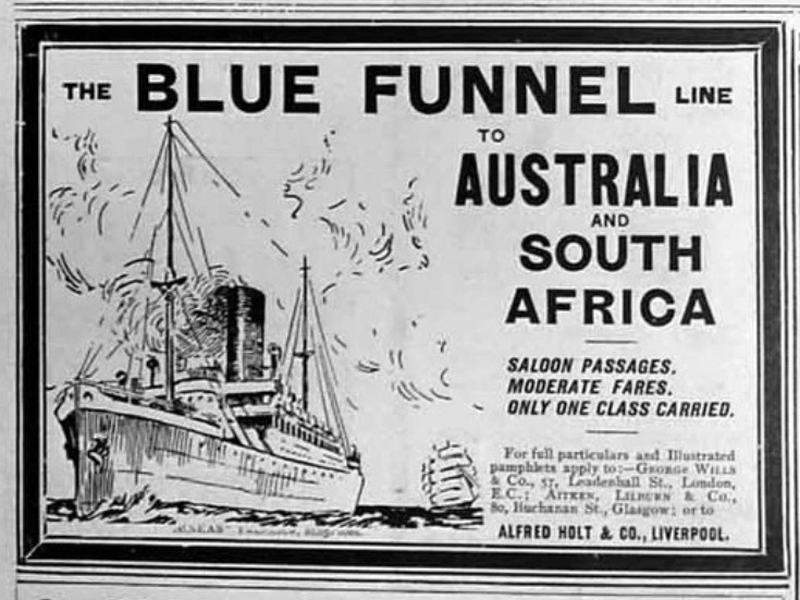 An advertisement for the Blue Funnel Line’s services to South Africa and Australia showing a steamship at sea.
There is no evidence beyond payments from the Scotsman and Weekly Scotsman - these hardly enough to keep things going in any real way - of Chrystal holding down any kind of profession or employment after his return to Edinburgh. He was on the cusp of his fifties when he came back, and perhaps was due some kind of pension from the shipping line to add to that part of his earnings that he’d been able to save. Is is possible that he attempted to live the life of a gentleman, even of a slightly distressed one, from his digs behind the shop at 187 Gilmore Place? Or was his return from the sea driven by a failure in his health? In 1935, the year of his scratchy publishing relationship with the Weekly Scotsman, he returned his name to the lists in the Medical Directory - surely now a matter of status and personal dignity rather than anything of a directly professional nature - and he’d keep his entry up until the last year of his life.
He seems also to have returned to taking photographs. At some point in the late 1930s or early 1940s, he compiled an album of his workEdinburgh City Libraries, Edinburgh Room, F.M. Chrystal Photographs of Edinburgh C0005709695, with images mounted on black album paper and succinctly captioned in white ink. Here and there, a pre-1916 image is paired with another of the same scene taken in c. 1938, accompanied with commentary on the changes. Francis was clearly aware of the antiquarian interest that his earlier pictures now held, but it is not clear what his intentions for the new album were. It may have been a private matter for Francis alone, a personal reflection on the output of a photographic life.
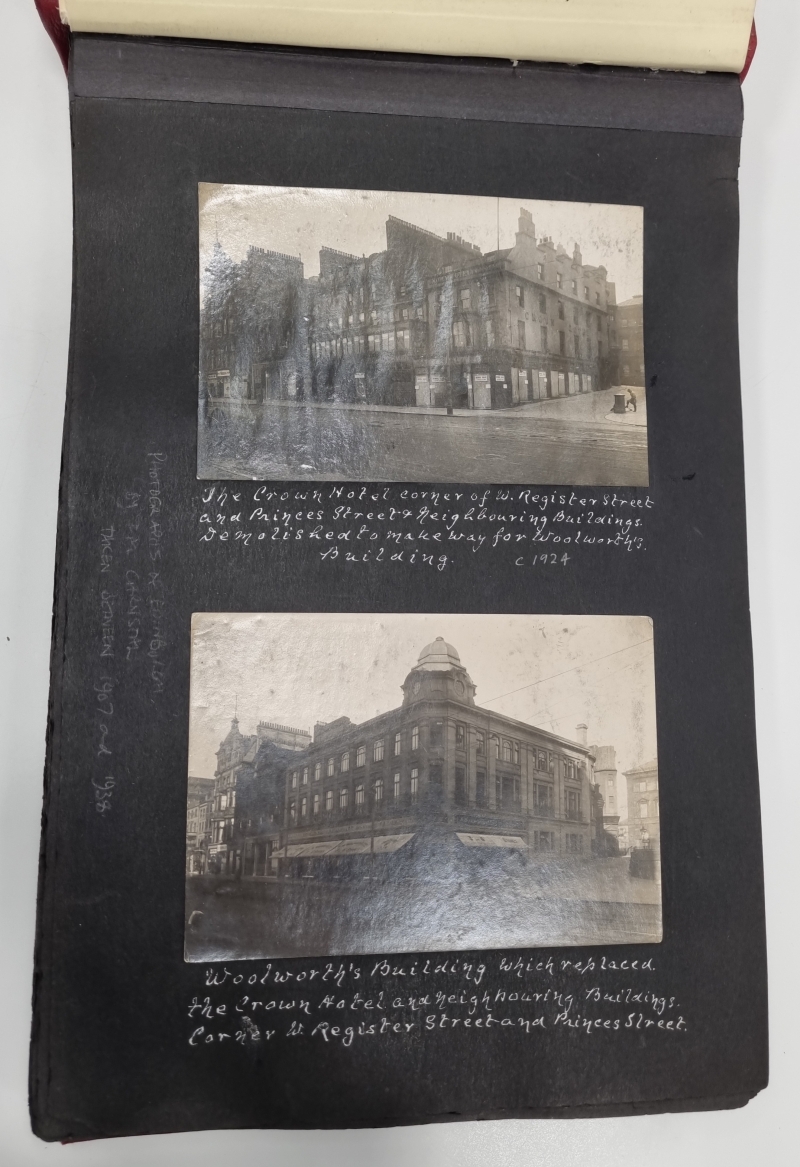 An opening from Francis Chrystal’s last album, assembled c. 1938-1940. Here two views of the same site at the east end of Princes Street, both by Chrystal, are contrasted.
But in purely photographic terms, the last new images were another step down. There was a hint of this in the Weekly Scotsman correspondence: in October 1935, Topping received an image from Francis and was forced to admit that “the photograph with the postcard camera does not appear to be very satisfactory there is fogging or lack of definition round the edges. Our Mr Glass of the reproduction department says that he would be pleased to give the camera a test if you cared to let me try it”. The reference to “the postcard camera” is hard to interpret: there were a number of Edwardian handheld cameras referred to in pre-1914 sales literature by that term. Topping may have simply meant that the plate size was the familiar 5 1/2 v 3 1/2, which many models of camera had been built around since the turn of the century.
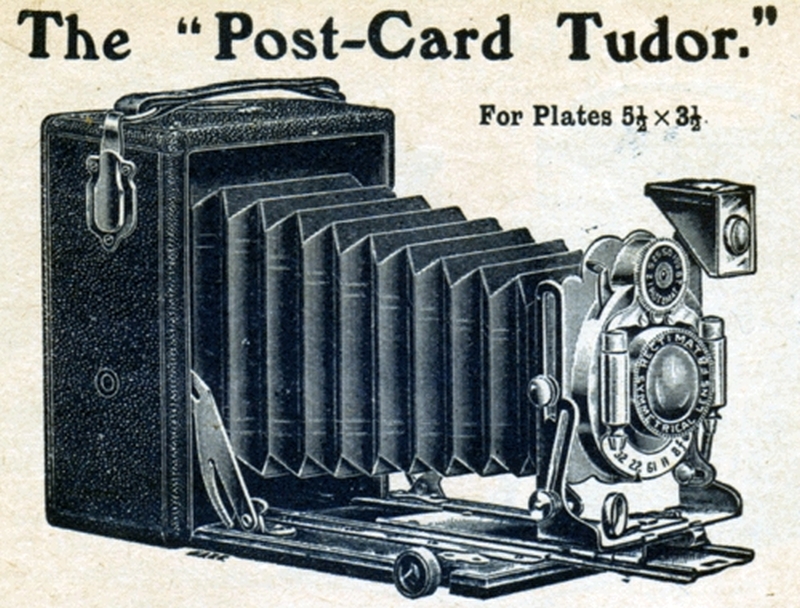 A typical Edwardian handheld “postcard camera”
The kind of equipment - both camera and darkroom - that was available to Francis by this stage is unknown. But Topping’s comments unfortunately hold good for the final images of 1938. So much is wrong now: the focus is snapshot-soft, and fogging closes in from the edges of the print. Even the contrast - never lacking before in Francis’ work - is gone. Add in the traditional Francis Chrystal disregard for framing and what is left is genuinely upsetting to behold. He must have known: the pre-1916 prints in the album sit on his late pages like accusations or slurs.
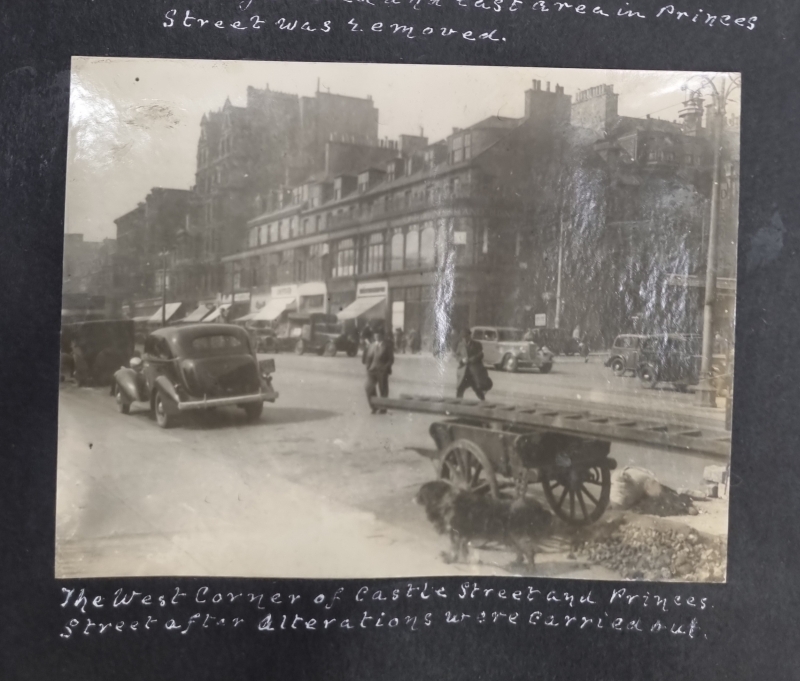 One of Francis Chrystal’s last photographs, of the west end of Princes Street at the foot of South Castle Street
The album is nevertheless Francis Chrystal’s last word. The front pastedown carries his name and address: Gilmore Place, and, underneath, a new address, the first change since 1925. In 1940, Francis moved into Queensberry House in the CanongateFor Queensberry House, see Margaret Hume and Sydney Boyd, Queensberry House Hospital : a history ed. E.F. Catford (Edinburgh: Directors of Queensberry House Hospital, 1984).
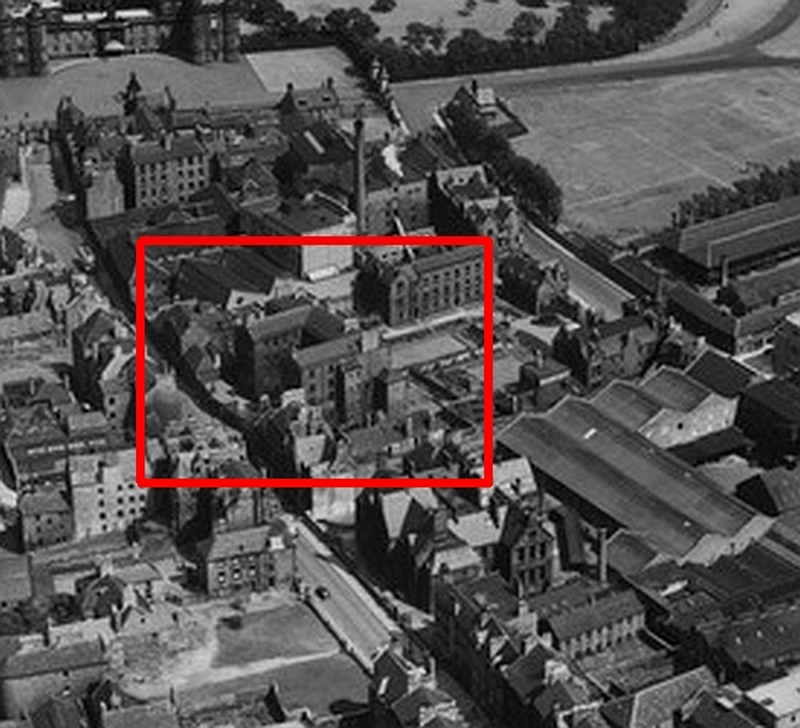 Queensberry House, indicated in red, from the air shortly after Francis Chrystal’s death. Britain From Above SAW024448 [detail]
Queensberry House was once one of that great string of royal and aristocratic houses that lined the Canongate in the sixteenth and seventeenth centuries. By the 1930s, it had been a hospital (in the sense of a place of refuge) for a century, and contained a night shelter, a nursing home for ‘aged and infirm gentlewomen’ and a ‘hospital-home’ for men and women with ‘straitened means’. It is in this latter category that Francis fell: he is not listed as part of the medical team kept up at the House, who in any case were not residential.
He appears to have taken to it gamely, keeping up his entry in the Medical Register, and in October 1940 he gave an illustrated talk to his fellow inmates on Iceland accompanied by his own photographsThe Scotsman ‘Scottish District News’, Wednesday 16th October 1940 p.5. It is a way to come full circle: Francis Maxwell Chrystal’s last recorded photographic action was to repeat his first, by giving the same lecture as he’d presented to the Edinburgh Photographic Society in 1909. There were no more, and on May 13th 1944 the Scotsman recorded his death as an item of local news.The Scotsman ‘Scottish District News’, May 13th 1944 p.3
He left no estatePer Wills and Testaments, www.scotlandspeople.gov.uk, and his affairs were wrapped up and his cremation arranged by his younger brother Neil, whose name appeared next to that of Francis in the Old Edinburgh Club membership lists in the early years. We do not know what support he received from his family in the later years, or what his relationship with them was. His eldest brother owned Madingley Manor (as distinguished from Madingley Hall) in Cambridgeshire, conveniently near to his sister, a don at Newnham College. One younger brother was an entomologist at Oxford University, the other a successful engineer and factory manager in Wiltshire (another brother had died in early infancy and is buried with his mother). This would suggest that the resources were there to help Francis had he needed it, and help of a discreet familial nature may well have been given.
At any rate, death in a refuge for the destitute might suggest that Francis was the family’s failure, its black sheep even. Photographers’ lives are often like that, and he had a photographer’s life, in the end. But while the books and achievements of his father and siblings fade into the past, for Francis there has been a second life, and a legacy, as photography carrying the attribution of Francis Maxwell Chrystal has come back into play via Capital Collections and Canmore/Trove and is now a celebrated historical resource in a city with a history scene comparable to those of Paris and New York.
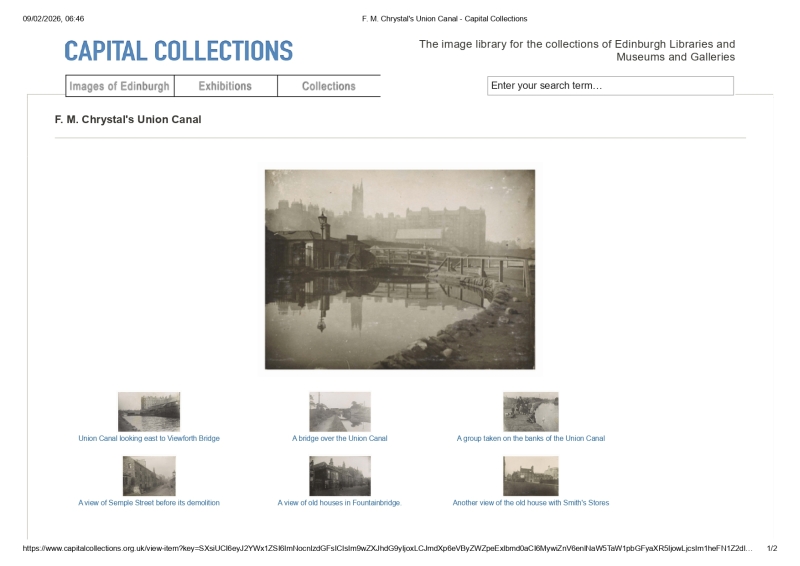 The “Capital Collections” page of Francis Chrystal images of Fountainbridge and the Canal
And even before that, in 1951, half a century after work on it commenced, RCHAMS finally took to press the seminal Inventory of the Ancient and Historical Monuments of the City of EdinburghAn Inventory Of The Ancient And Historical Monuments Of The City Of Edinburgh, With The Thirteenth Report Of The Commission (Edinburgh: His Majesty’s Stationery Office, 1951). It had been, as we’ve seen, a project of Francis’ youth, and now, seven years after his death in a refuge, his pictures of the Tailor’s Hall and the Magdalen Chapel appeared, albeit unattributed, as plates in the official record.
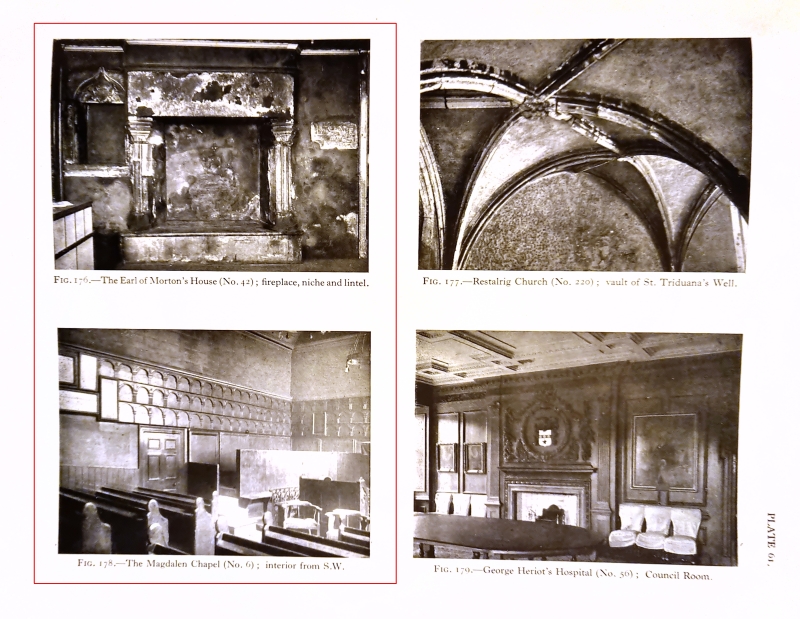 Francis Chrystal’s images (ringed in red) of the Magdalen Chapel in the seminal 1951 RCHAMS Edinburgh Inventory
The immediate afterlife of Francis’ photographic archive is unknown. It is clear that a great deal of material relating to Edinburgh was given at some point, perhaps by Neil Chrystal, to the Edinburgh Corporation Architect’s Department, perhaps when it was still under the direction of the great Ebenezer MacraeFor Ebenezer Macrae, see Steven Robb, ‘Ebenezer Macrae and Interwar Housing in Edinburgh’ Book of the Old Edinburgh Club New Series Vol. 13 pp. 43-77. In 1969, the collection given to the Architect’s Department was reassigned, with the negatives relating to Edinburgh passing to the National Monuments Record of Scotland. These now form the vast collection visible at Trove. The albums of prints were passed to the City of Edinburgh Libraries, then still under the leadership of Charles Sinclair Minto, a photographer in his own right, who instantly recognised the value of what his service had received. Much of this second group can now be seen at Capital Collections.
Minto included 16 images from the new collection in his Victorian and Edwardian Edinburgh from Old Photographs (London: Batsford, 1973), one of the first of a new breed of publications of collections of early photographs made possible by improvements in printing post-War. It is clear from Minto’s book, and the cataloguing of the images more generally, that much George Chrystal work is included with Francis Chrystal images, with no secure means of distinguishing the two.
There may be more of Francis’ work still to be found. The pictures of Iceland shown at his lectures are missing, and a set of glass negatives relating to railway subjects (also originally given to the City Architect) was placed with the now National Records of ScotlandNational Records of Scotland GD1/611 F.M. Chrystal, Photographs of Railway Subjects where it remains unstudied. George Chrystal photographs are present in the Heritage Collections at the University of Edinburgh LibraryUniversity of Edinburgh Heritage Collections, Coll-172 and Coll-1492.
This account of Francis would not have been possible without the advice and help of the staff of Edinburgh Central Library and the National Library of Scotland. I am grateful for information from the Edinphoto website by the late (very regrettably, the late) Peter Stubbs and the Fountainbridge research of Graeme Cruickshank.